
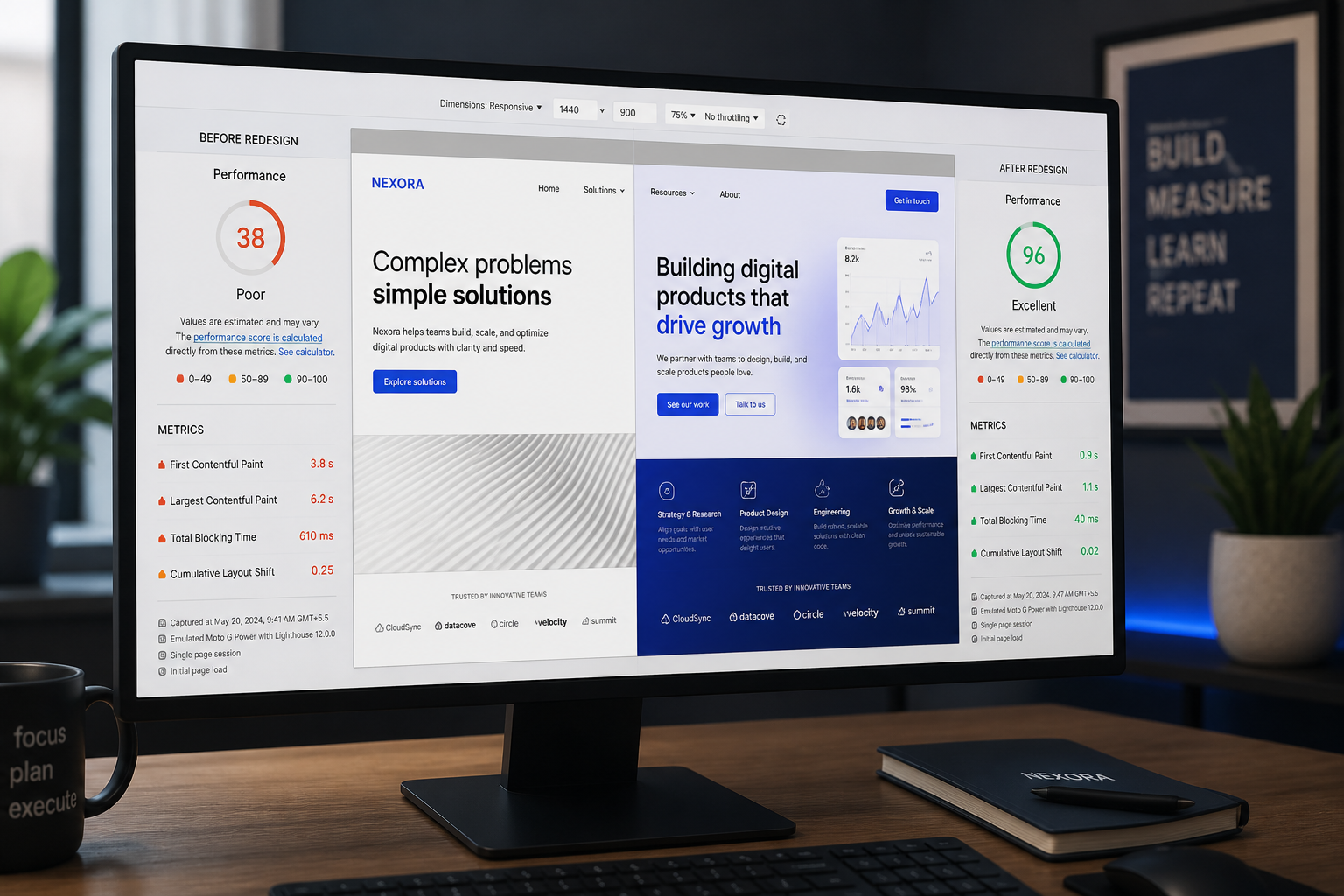
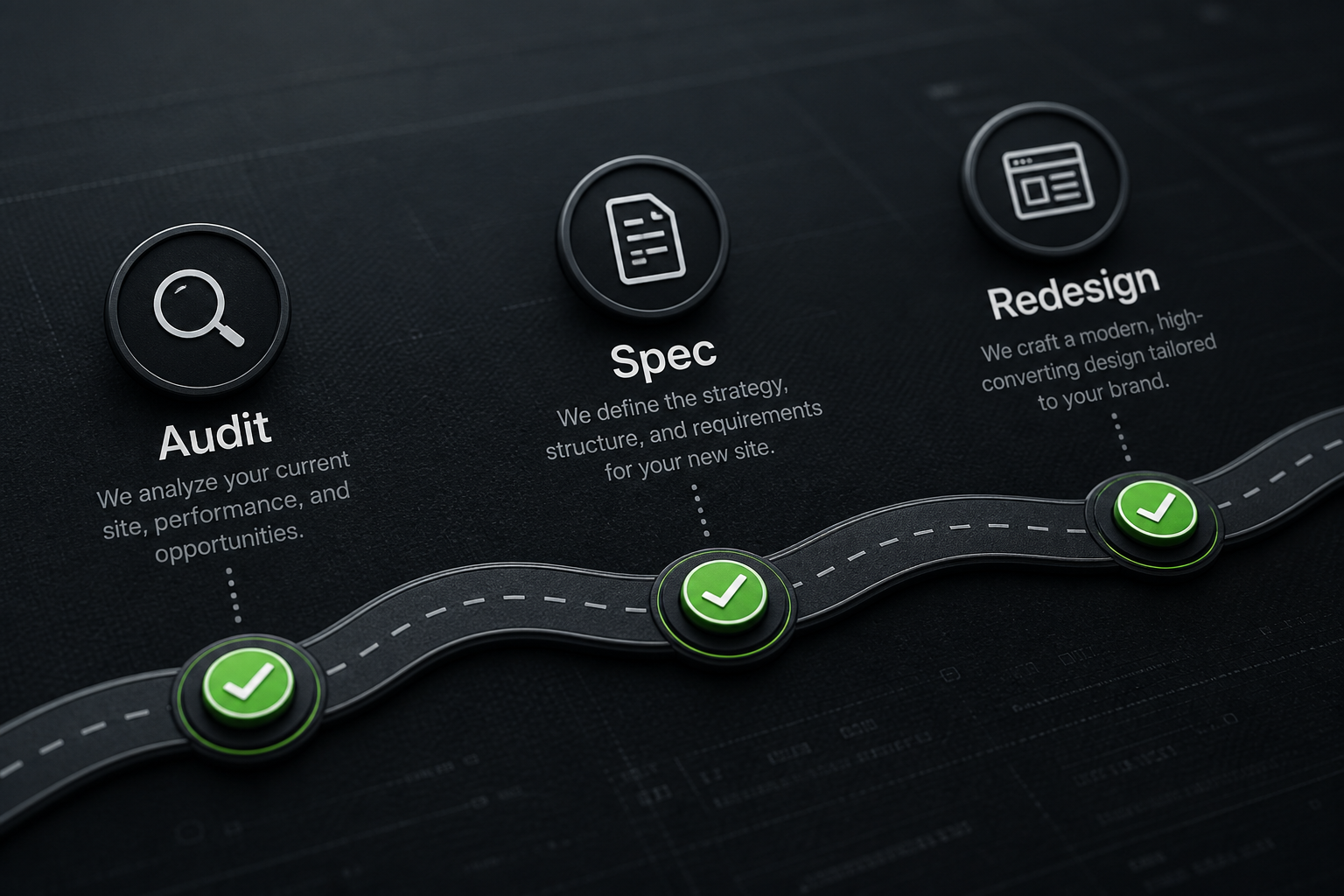
A performance audit before a website redesign answers one question with evidence: should you fix what you have or rebuild? Teams often jump to redesign when optimization would solve 80% of the problem in weeks — or spend $15,000 on a new site that repeats the same page builder, tag sprawl, and image habits that made the old one slow.
The audit costs $150–$500 (estimate) against a redesign at $5,000–$25,000+. That's asymmetric ROI for a go/no-go decision.
Why redesign plans skip the audit
| Assumption | Reality |
|---|---|
| "New theme = fast site" | New theme + 40 plugins + uncompressed images = slow new site |
| "Our developer said we need redesign" | Developers sell builds; independent audit sells clarity |
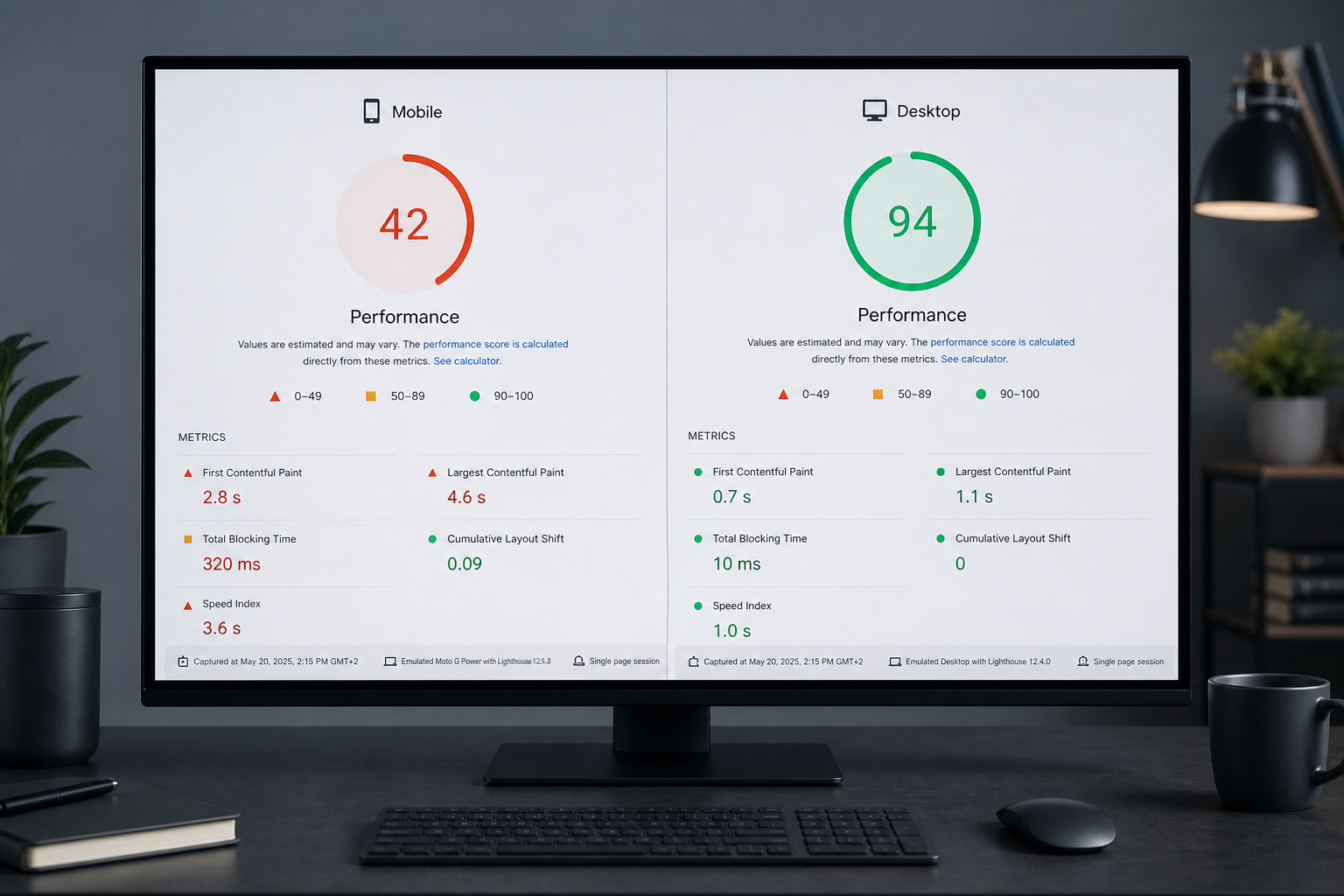
| "PageSpeed is red so redesign" | Red PSI often fixes with cache, images, script cleanup |
| "We're redesigning anyway" | Audit sets performance budget for the new build |
| "SEO agency recommended rebuild" | Confirm performance is the actual bottleneck vs content/links |
Redesign for speed without diagnosis is expensive guesswork.
What the audit decides
Three possible outcomes:
1. Optimize — don't redesign yet
Signals:
- Theme is maintained and compatible with current WordPress
- Core Web Vitals failures map to images, cache, TTFB, third-party scripts
- Content and URL structure are sound
- Page builder bloat is reducible with per-page assets or template simplification
Action: Fix list from audit → implement → re-evaluate in 8–12 weeks. Redesign deferred or scoped smaller (visual refresh only).
2. Redesign — optimization won't stick
Signals:
- Abandoned theme or page builder locked into deprecated stack
- Every page loads full builder asset library regardless of content
- Mobile layout requires custom fixes per page
- Technical debt exceeds fix budget (plugin conflicts, custom hacks nobody understands)
- Previous optimization reverted within months
Action: Redesign with written performance requirements from audit — what not to repeat.
3. Hybrid — partial rebuild
Signals:
- Homepage and landing pages need new templates; blog and catalog are fine
- Checkout works but marketing site is unsalvageable
- Headless front-end makes sense for marketing; WordPress stays for CMS
Action: Phased project — audit identifies which templates rebuild vs tune.
Audit inputs that inform redesign scope
| Finding | Redesign implication |
|---|---|
| GTM container with 18 unused tags | Tag governance policy in new site |
| Hero images average 1.5MB | Image workflow + CDN in launch checklist |
| LCP element is page builder background | Block-based or custom theme with real `<img>` heroes |
| INP fails on mobile nav | Native nav, no 200KB menu script |
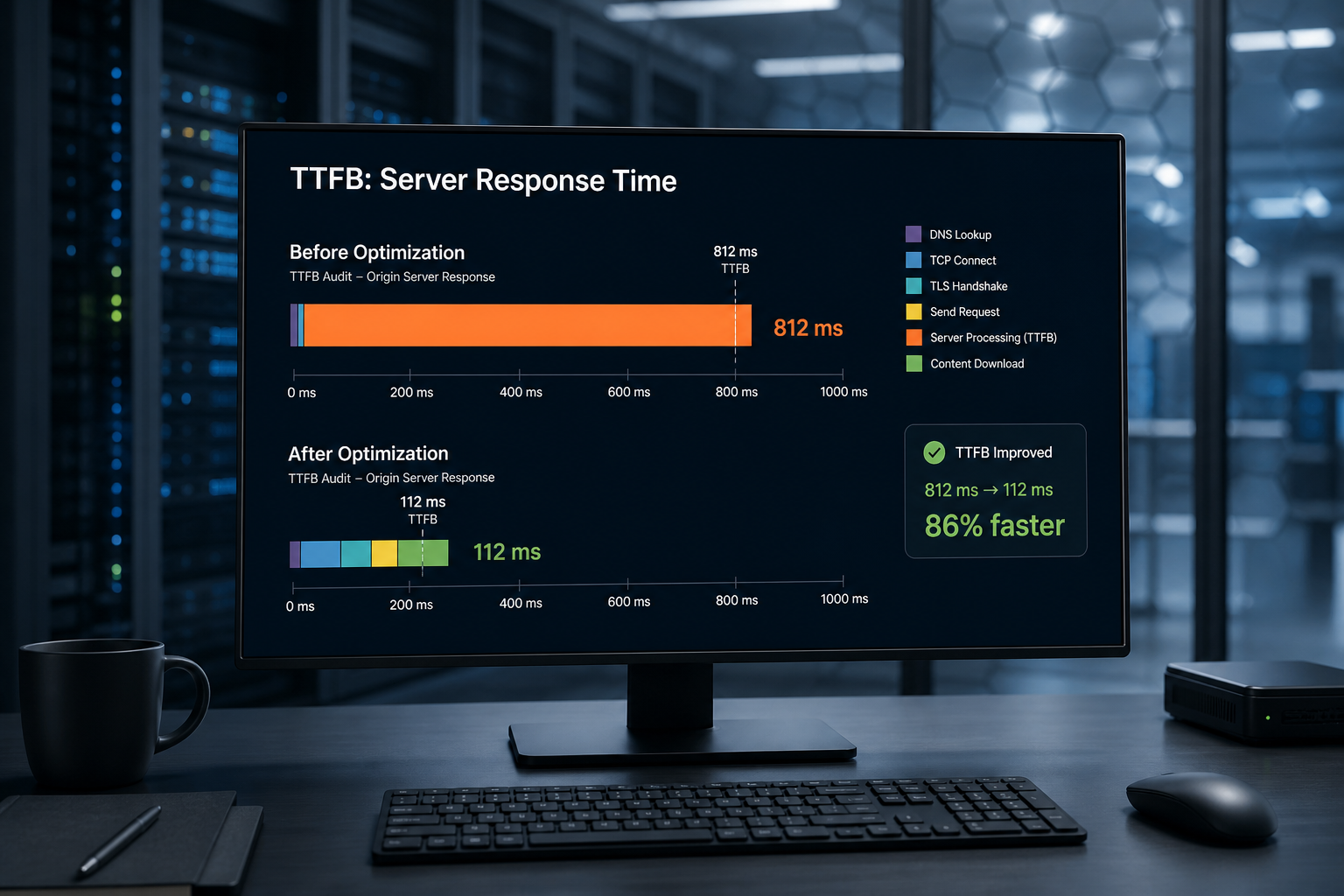
| TTFB 1.2s on cached pages | Hosting tier requirement in RFP |
| WooCommerce checkout plugin stack fragile | Simplify checkout extensions in rebuild |
The audit becomes the performance brief for whoever designs or develops the new site.
Performance budget for the new site
If redesign proceeds, set targets before design starts — not after launch.
| Metric | Launch target (suggested) |
|---|---|
| LCP (field) | Good (≤ 2.5s) on top 10 URLs |
| INP (field) | Good (≤ 200ms) on key interactions |
| CLS (field) | Good (≤ 0.1) |
| Homepage JS transfer | Set ceiling (e.g., < 300KB — adjust for stack) |
| Third-party scripts | Named list with owner; no orphan tags |
| Plugin count (WordPress) | Maximum agreed count |
| Page builder scope | Which templates use builder vs native blocks |
Designers choosing full-screen video heroes and 6 font weights should know the LCP and CLS cost before approval.
Timeline: audit then redesign
| Phase | Duration | Output |
|---|---|---|
| Performance audit | 3–5 days | Optimize vs rebuild recommendation |
| Decision gate | 1 meeting | Go optimize, go redesign, or hybrid |
| RFP / scope (if redesign) | 1–2 weeks | Performance brief attached |
| Design + build | Weeks–months | Budget includes performance acceptance criteria |
| Pre-launch audit | 2–3 days | New site tested against same checklist |
| Launch | — | Monitor Search Console 28 days post-launch |
Skipping pre-launch audit on the new site repeats the cycle.
Questions to ask your redesign vendor
- Did you review our performance audit findings?
- What's the LCP strategy for the homepage hero?
- How many third-party scripts load on checkout?
- Which pages use the page builder vs custom templates?
- What's cached and excluded on WooCommerce?
- Will you test mobile field vitals before launch?
- What happens if launch scores fail Core Web Vitals?
If they can't answer concretely, they'll deliver a pretty slow site.
Cost framing (estimates, USD)
| Path | Cost | Time |
|---|---|---|
| Audit → optimize | $150–$500 audit + $500–$2,500 fixes | Weeks |
| Skip audit → redesign | $5,000–$25,000+ | Months |
| Audit → redesign | $150–$500 + rebuild | Months, but informed |
| Optimize → still redesign later | Audit + fixes + later rebuild | Paid learning — still valuable |
Optimizing first doesn't waste redesign budget if audit shows rebuild is inevitable — you bought confirmation.
When to skip audit before redesign
| Situation | Reason |
|---|---|
| Site is malware-compromised and unsalvageable | Security drives rebuild, not speed |
| Rebrand requires entirely new IA and URLs | Redesign decided; audit still useful as pre-launch check |
| Platform migration mandatory (Wix → WordPress) | Performance audit on old site less relevant |
| Budget and timeline already locked for rebuild | Run pre-launch audit instead |
Even in these cases, a pre-launch website performance audit on staging beats post-launch firefighting.
Connect audit findings to child guides
Use specialized guides during implementation (optimize or rebuild path):
Frequently asked questions
Can we redesign and optimize at the same time?
Yes — that's the hybrid path. Audit clarifies which pages belong in which track.
Will redesign automatically fix Core Web Vitals?
No. New sites launch slow when performance isn't specified. Pre-launch testing catches this.
Should SEO or performance audit come first?
Both inform redesign. Performance audit answers speed architecture; SEO audit answers URLs, content, and indexing. Ideal to run in parallel.
How do I convince stakeholders to audit before redesign?
Compare $200–500 audit to $10,000+ rebuild risk. One avoids the other or makes it smarter.
What if audit says optimize but we want new design for branding?
Valid — separate visual refresh from full rebuild. Optimize backend speed while planning phased design update.
Book a free 15-minute site audit
Planning a redesign because the site is slow? Book a free 15-minute audit first. I'll tell you honestly whether you need a rebuild or a fix list — and point to the full website performance audit if a written go/no-go report would help your team decide.
August 5, 2026
Mobile vs Desktop PageSpeed Gap
August 5, 2026